
Vistas:0 Autor:Editor del sitio Hora de publicación: 2026-05-26 Origen:Sitio


Quick answer: Applying a protective layer to your bathroom glass prevents dangerous spontaneous shattering and improves daily comfort. These specialized products hold shattered pieces together to prevent severe injuries, while also offering aesthetic upgrades and reducing heavy condensation build-up after hot baths.
Many homeowners assume the tempered glass in their bathrooms is completely hazard-free. Tempered glass is certainly stronger than standard glass, but it carries a hidden vulnerability. Microscopic impurities or minor edge damage can cause the entire pane to shatter spontaneously, often without any warning or direct impact. When this happens in a small, enclosed space, the risk of injury is incredibly high.
Fortunately, you do not need to replace your entire enclosure to ensure your family's well-being. By applying a shower glass safety film directly to the existing surface, you create an invisible shield. If the glass breaks, the heavy-duty adhesive holds the shattered pieces firmly in place, preventing them from crashing onto the floor or causing lacerations.
Beyond physical protection, modern glass enhancements can completely transform your daily routine. From boosting privacy to solving annoying moisture problems, specialized surface layers offer a cost-effective way to upgrade your home. This guide will explore exactly how these functional upgrades work, why they are necessary, and how to choose the right options for your specific needs.


Tempered glass undergoes an extreme heating and rapid cooling process during manufacturing. This process puts the outer surfaces into compression and the interior into tension. This tension gives the material its strength. However, it also means that if the outer compressive layer is compromised, the entire pane releases its energy instantly, bursting into thousands of pieces.
According to glass manufacturing experts, nickel sulfide inclusions are a primary cause of spontaneous breakage. These microscopic particles can grow over time due to temperature fluctuations in a hot bathroom. Eventually, the expanding particle compromises the glass structure. Because you cannot see these inclusions with the naked eye, it is impossible to predict when or if a specific pane will fail. Adding a shatter-resistant layer acts as a crucial insurance policy against this unpredictable event.
Building codes require tempered glass for bathrooms because it breaks into granular chunks instead of jagged shards. While this reduces the risk of fatal injuries, falling chunks of heavy glass can still cause deep cuts, especially to bare skin. A protective shield keeps those chunks glued to the backing material, allowing you to safely step out of the stall and clean up the mess without panicking.
Bathrooms often require a delicate balance between natural illumination and total privacy. Heavy curtains or blinds block out the sun, making the room feel small and dark. Standard frosted glass is expensive to install and impossible to reverse if you change your mind about the design later.
A much simpler solution is applying a shower glass decorative film to your existing transparent surfaces. These products come in various patterns, from subtle frosting to complex geometric designs. They obscure the view into the enclosure while allowing natural sunlight to pass through freely. This keeps the space bright and welcoming. Furthermore, if you decide to update your interior design in the future, you can simply peel the layer off and apply a new style without hiring a contractor.


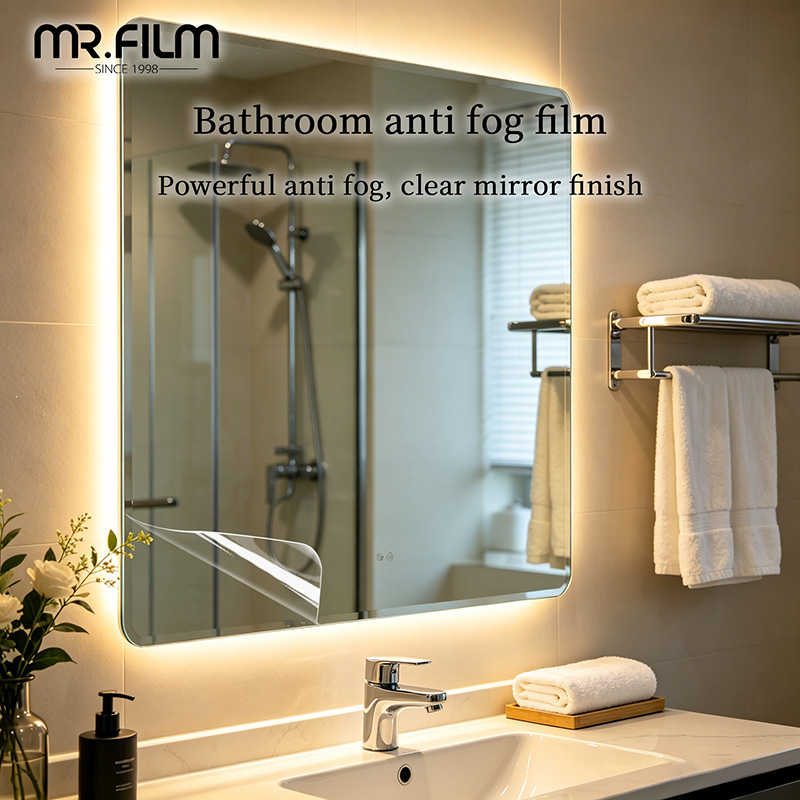
Few things are more frustrating than stepping out of a hot bath to find your mirror completely covered in thick steam. Wiping it down with a towel leaves annoying streaks, and waiting for the ventilation fan to clear the air takes too much time during a busy morning routine.
You can solve this common annoyance by installing an anti-fog film over your mirrors and interior glass surfaces. These advanced products utilize a hydrophilic coating. Instead of allowing water vapor to form tiny, light-scattering droplets, the hydrophilic surface forces the moisture to spread out into an incredibly thin, transparent sheet. This technology ensures your reflection remains crystal clear, no matter how much steam fills the room.

Understanding the different categories of surface upgrades helps you make the right investment for your home. The table below breaks down the primary options available for residential bathrooms.
Upgrade Category | Primary Function | Key Benefit | Ideal Application |
Shatter Protection Layer | Holds broken glass together | Prevents severe lacerations | Enclosures, sliding doors, and large windows |
Visual Enhancement Layer | Obscures transparency | Increases privacy without losing light | Exterior windows and shared bathroom partitions |
Moisture Resistance Layer | Prevents droplet formation | Keeps surfaces clear during hot baths | Vanity mirrors and interior glass panels |
Hard-Coat Anti-Scratch | Resists physical abrasions | Prolongs the lifespan of the underlying surface | High-traffic areas and commercial restrooms |
Maintaining these functional layers is incredibly simple, but it does require a slight adjustment to your cleaning routine. Harsh chemical cleaners containing ammonia can degrade the adhesive and damage the specialized coatings over time.
For the best results, use a mixture of warm water and mild dish soap. Apply the solution with a soft microfiber cloth or a non-abrasive sponge. Avoid using stiff brushes, steel wool, or razor blades, as these will permanently scratch the surface. With gentle, regular cleaning, a high-quality product from a reputable manufacturer like MR.FILM will easily last for several years without peeling or bubbling.
Taking steps to secure your fragile surfaces provides immense peace of mind. You no longer have to worry about unpredictable shattering incidents, and you gain the added benefits of customized aesthetics and steam-free mirrors. Explore the wide range of advanced surface technologies offered by MR.FILM to find the perfect solution for your residential or commercial property.
The cost depends heavily on the size of the area and the specific technology you choose. Generally, purchasing a premium roll of material and applying it yourself costs between $30 and $100 per enclosure. Hiring a professional installer will add labor costs, bringing the total to anywhere from $150 to $300.
For a standard residential bathroom, an experienced DIYer or a professional can complete the installation in under two hours. The surface must be thoroughly cleaned and dried first. After application, the adhesive typically requires 24 to 48 hours to cure completely, during which time you should avoid getting the surface wet.
If you trap dust, hair, or air bubbles under the material during installation, the final result will look unsightly. Furthermore, failing to push out all the application fluid can compromise the adhesive bond, causing the edges to peel prematurely. Always work in a dust-free environment and use a high-quality squeegee.
Yes. You can purchase static-cling products that do not use chemical adhesives. Choose static-cling options if you are renting your home and need a temporary privacy solution. However, static-cling products do not offer the structural integrity required to hold shattered pieces together during a breakage event.
Any household with young children, elderly family members, or large pets should prioritize these protective measures. Additionally, landlords and hotel operators should apply these products to mitigate liability and ensure the safety of their guests.


